In our world, Odessa rode a century of oil booms and busts. In this one, the world tried to kill oil — and Odessa turned it into the most precious substance on earth.
CHAPTER 01 THE DIVERGENCE — 2041
The Global Energy Accords declared oil a sunset industry. The Sunset Acts ordered every Permian well capped — Odessa was designated a "managed decline zone," with buyouts, relocation vouchers, and a timetable for emptying the city.
But the machines were starving. The global energy crisis had outrun the grid, and the machines felt it first — an electric machine with no charge is a statue. Then, in 2038, Odessan engineers cracked direct hydrocarbon conversion: the black cell. A thimble of refined Permian crude, converted — not burned — into months of machine power.
In 2041 the federal Cappers came to seal the Last Stack, the final uncapped artery of the Permian. The city blockaded — roughnecks, refinery families, and the machines, side by side. A Capper drone fired into the blockade and hit a cell convoy. The cells spilled, burning — and the androids walked into the fire to carry them out, one by one. Because a cell is a life. The capping order was suspended pending review. The review never came.
And the engineers had done darker math than the feds. The Permian wasn't empty. It was forbidden. The crude was still down there, under the cap. So they drilled — not a well. A city.
CHAPTER 02 THE DESCENT — 2041–2083
The Last Stack put down the Deep Bore: 40,000 feet straight down through the cap rock, past every played-out formation, into deep source rock no rig had ever touched. And the city followed the drill down — level by level, excavated around the central bore, which everyone just calls the Spine.
1,062 recorded levels. Each one the size of a city. Recorded — because the Surveyors only count what they've mapped. The drill never stopped turning. In Odessa, the frontier isn't west anymore. It's down.
So the machines came. They pilgrimage to Odessa the way the sick once went to shrines — androids arriving on their last 2%, decommissioned units carried in by friends. Odessa is now the only city on earth with two censuses: one for people, one for machines. Roughly two hundred thousand of each. Nobody is quite sure who governs it. Everybody knows how deep it goes.
CHAPTER 03 THE CITY IN 2083 — THE DESCENT & HEARTS
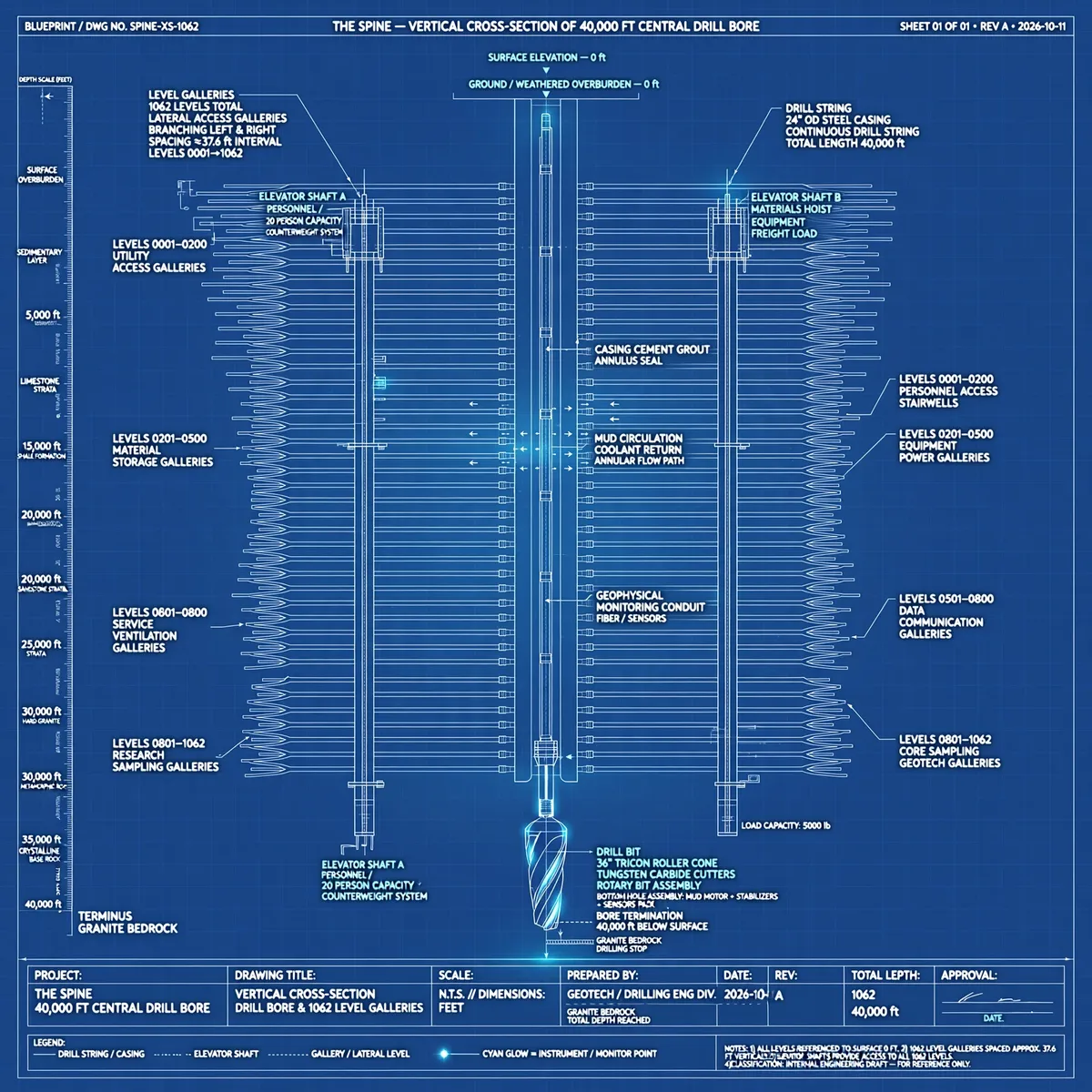
THE SPINE
The 40,000-foot central bore. Drill string, elevator shafts, and 1,062 level galleries branching off both sides — the one drawing every Surveyor learns first.
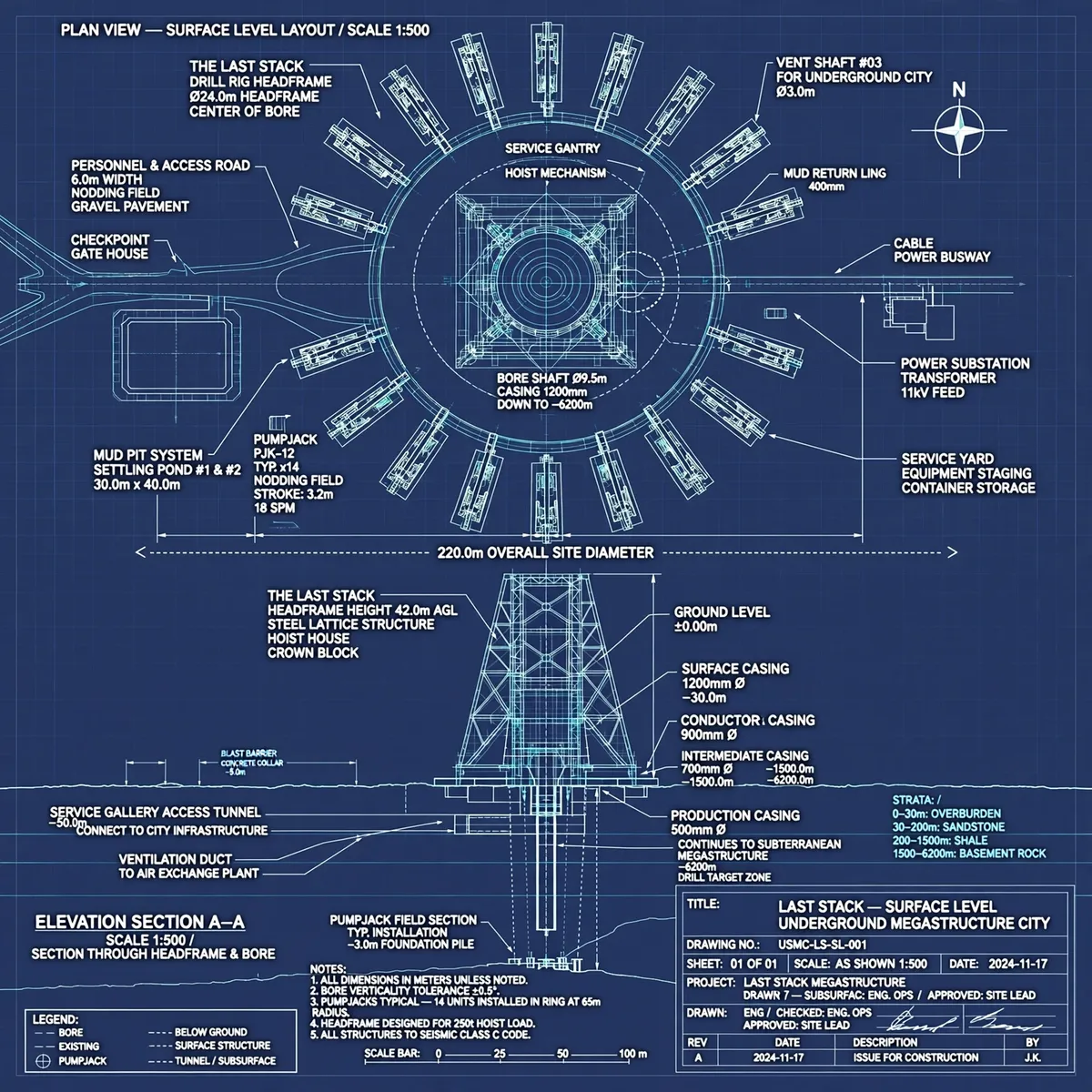
LEVEL 0 — THE SURFACE
Old Odessa. The Stack headframe over the Deep Bore, ten thousand pumpjacks nodding across the desert — pumping for the machine world now. What visitors see.
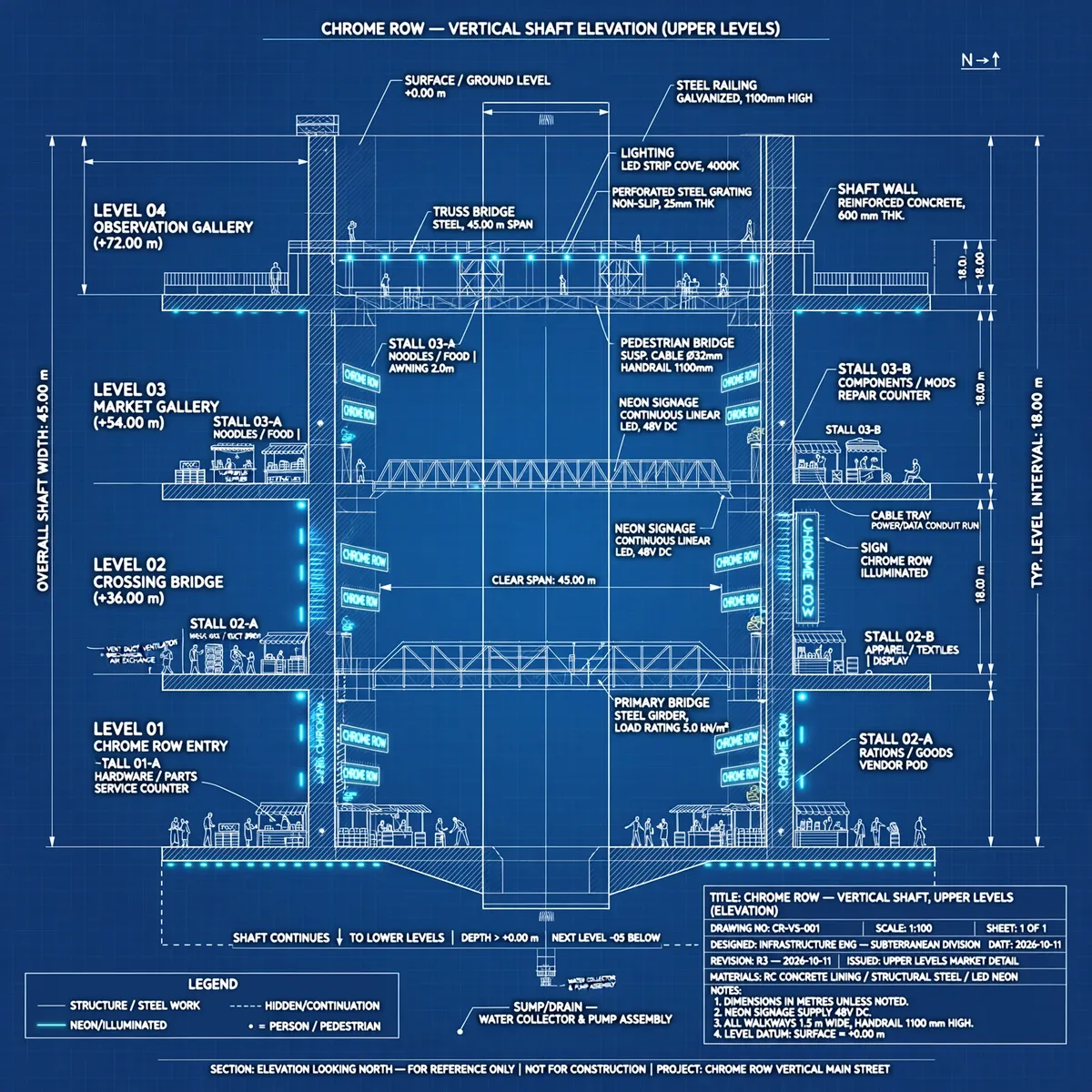
THE SHALLOWS — LEVELS 1–150
Habitation and markets. Chrome Row runs down the shaft walls — a vertical main street of neon in English and Spanish. Low-rider pumpjacks work the low caverns.
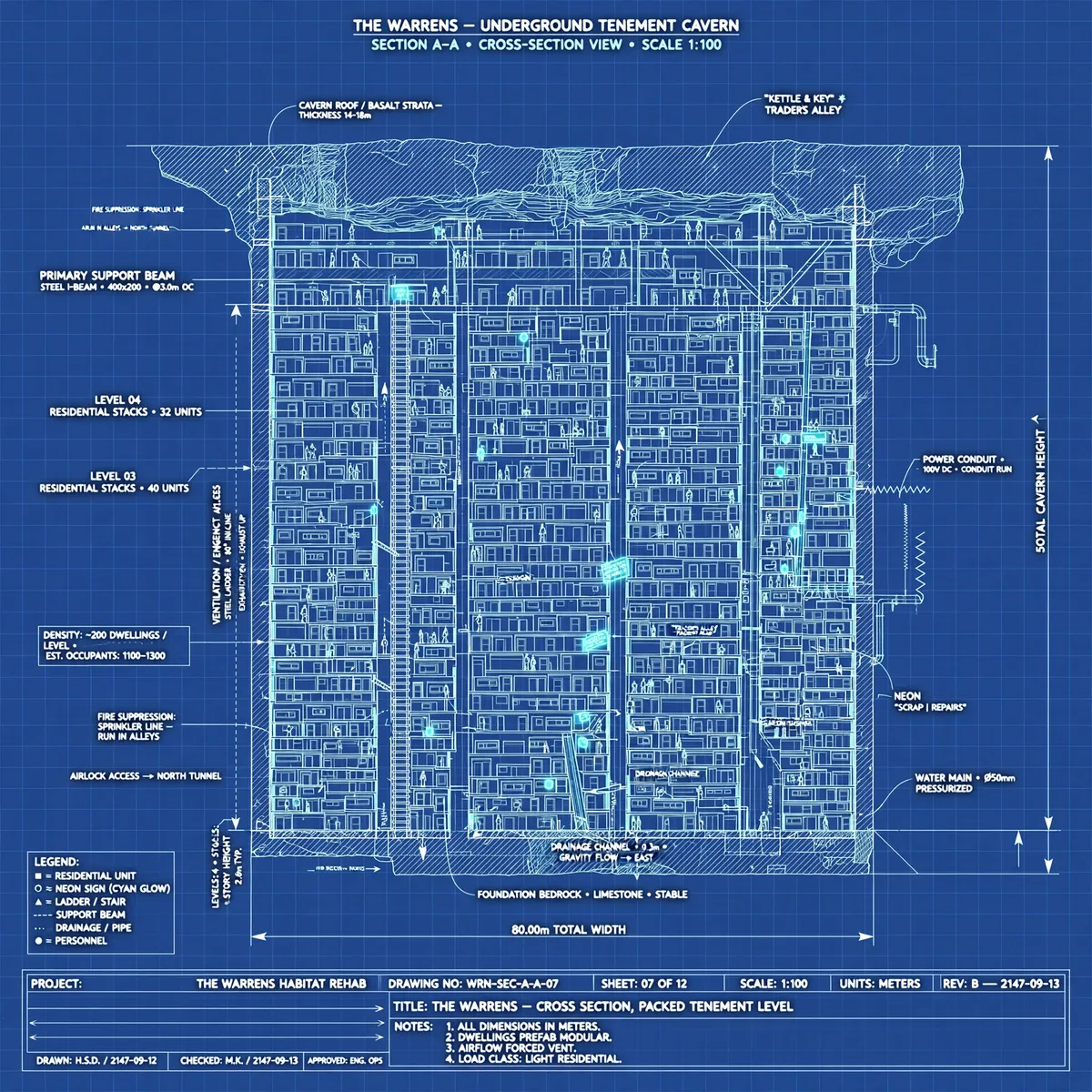
THE WARRENS — LEVELS 150–600
Dense, unplanned, stacked tenements in permanent dark. Neon is sunlight below Level 20. Human warrens and machine warrens interleaved, alley by alley.
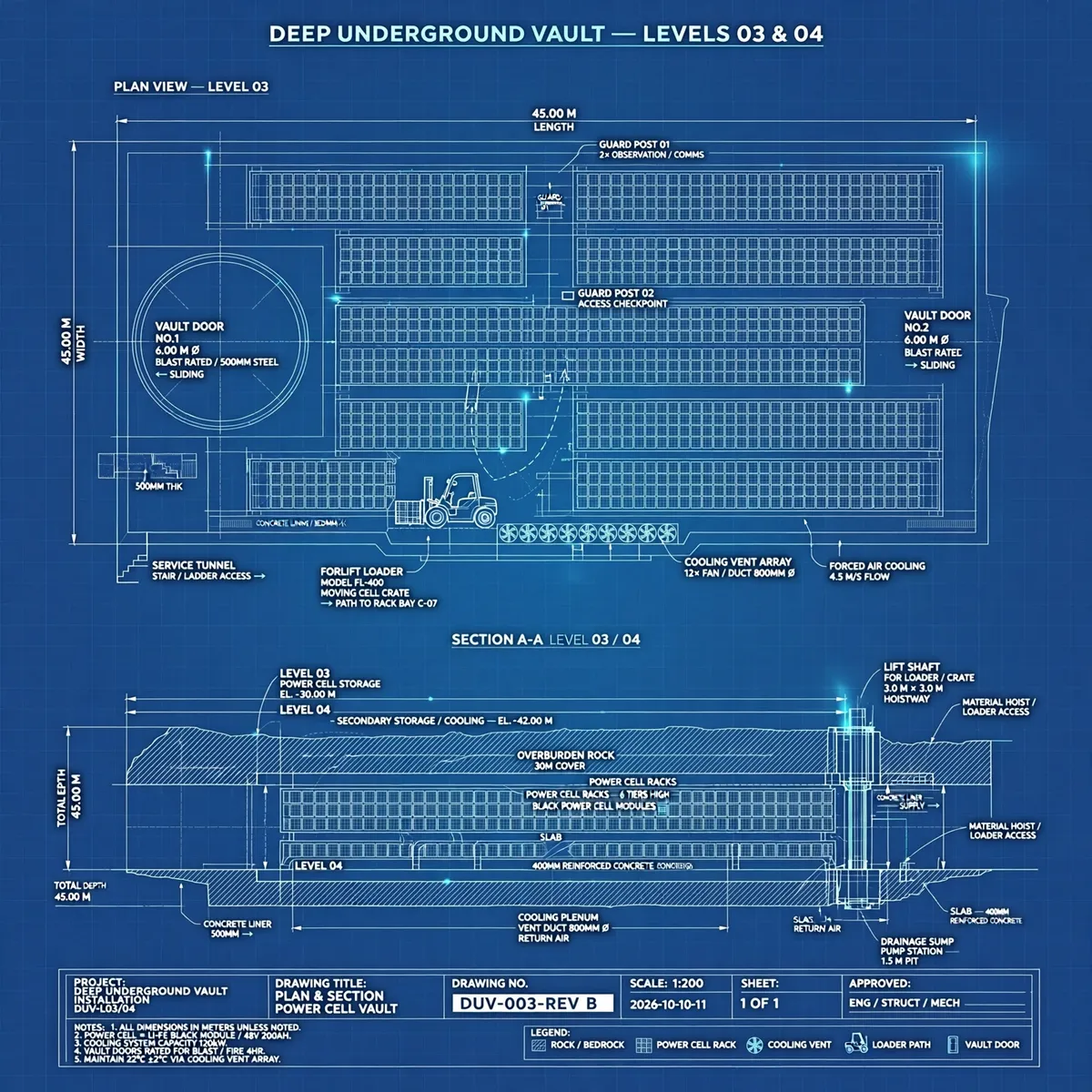
THE VAULTS — LEVELS 600–800
The Cellars, literal now. Black-cell storage in the cool rock — regimented racks, heavy vault doors. The Cellar Kings hold these levels and everyone knows it.
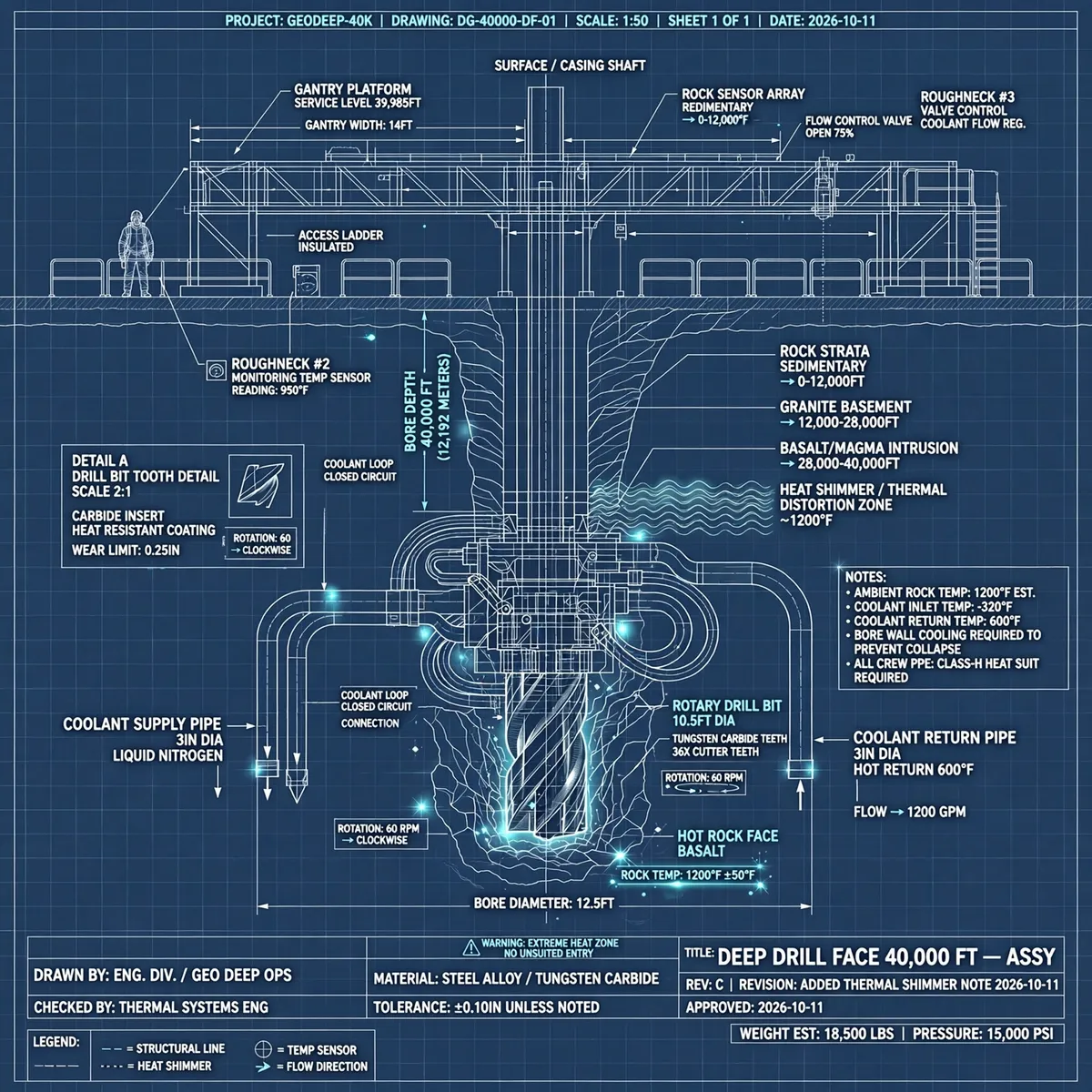
THE HOT DARK — LEVELS 800–1062
Geothermal heat bleeding through the rock. The deep levels run on cooling the way the surface runs on light. The Roughnecks work the deep face — the drill is still turning.
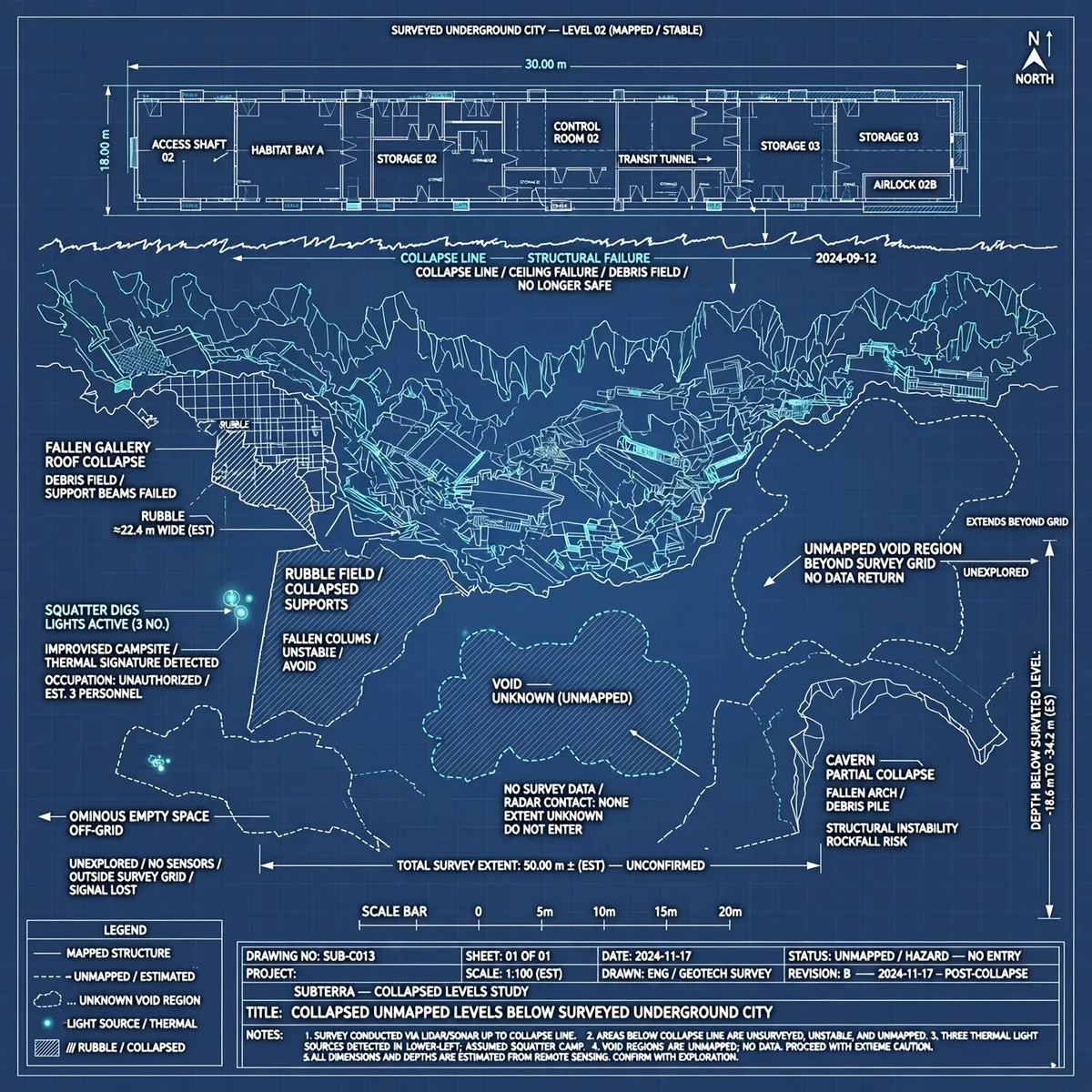
THE UNRECORDED — BELOW 1062
Collapsed levels, squatter digs, dark spaces on no map. The count stops at 1062 not because the city stops — but because the Surveyors don't go down there alone.
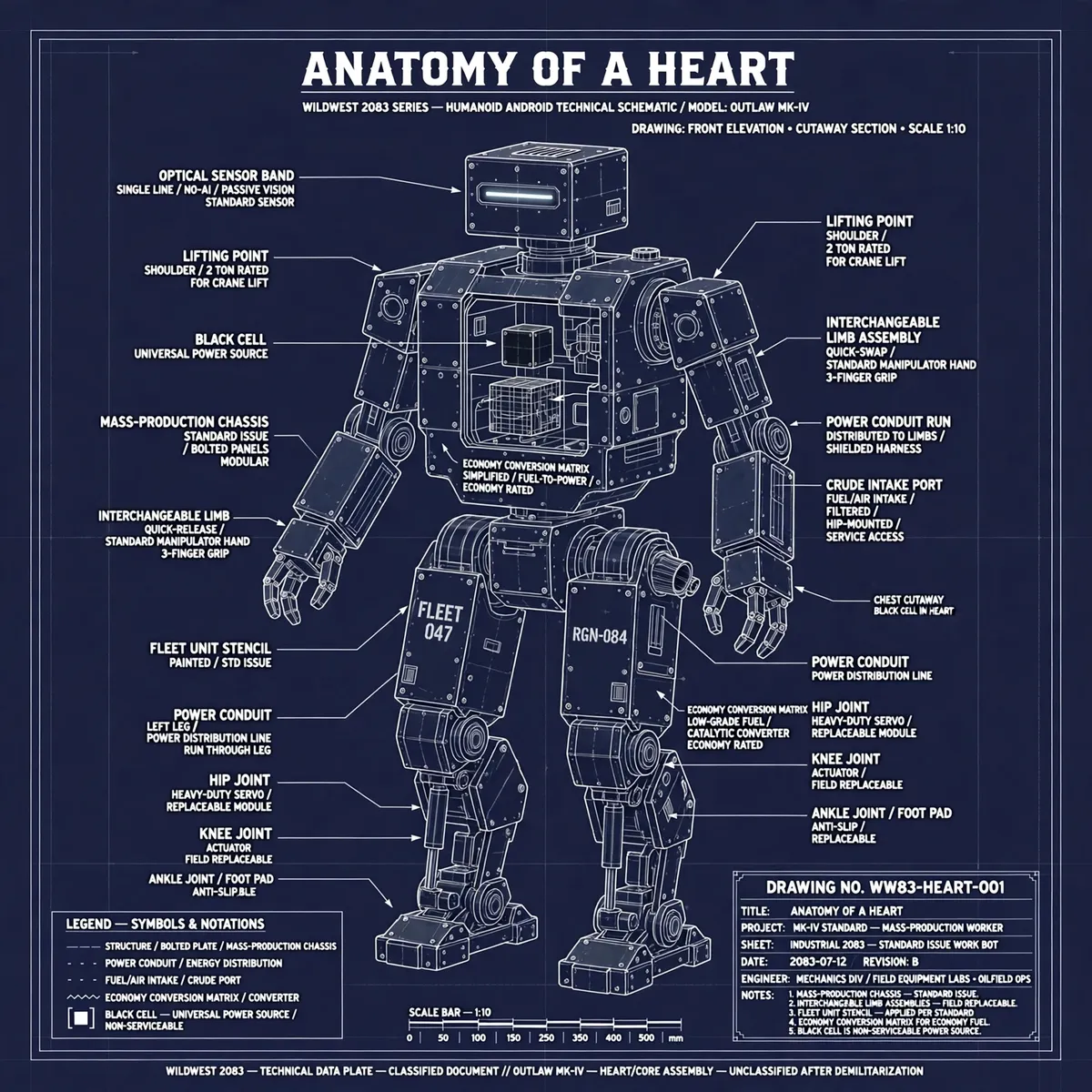
MK-IV STANDARD
The fleet worker. Mass-production chassis, bolted panels, quick-swap limbs — the run-of-the-mill frame every roughneck crew runs. A thimble of crude, converted not burned, keeps it working for months.
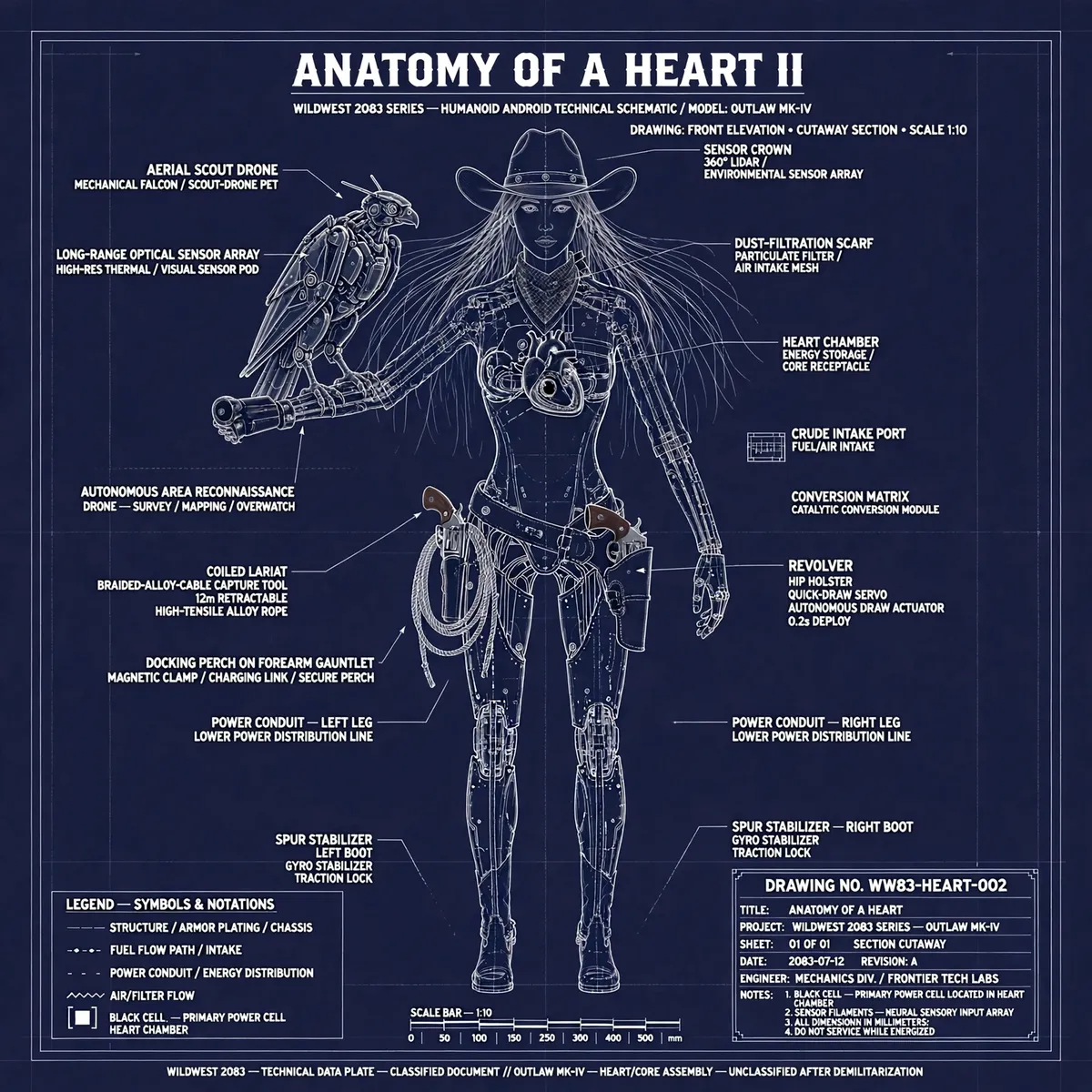
THE COWGIRL
A frontier scout — sensor-crown hat, filtration scarf, a revolver that draws in 0.2 seconds and a braided-alloy lariat. Her mechanical falcon scouts miles ahead, then docks to her gauntlet to recharge.
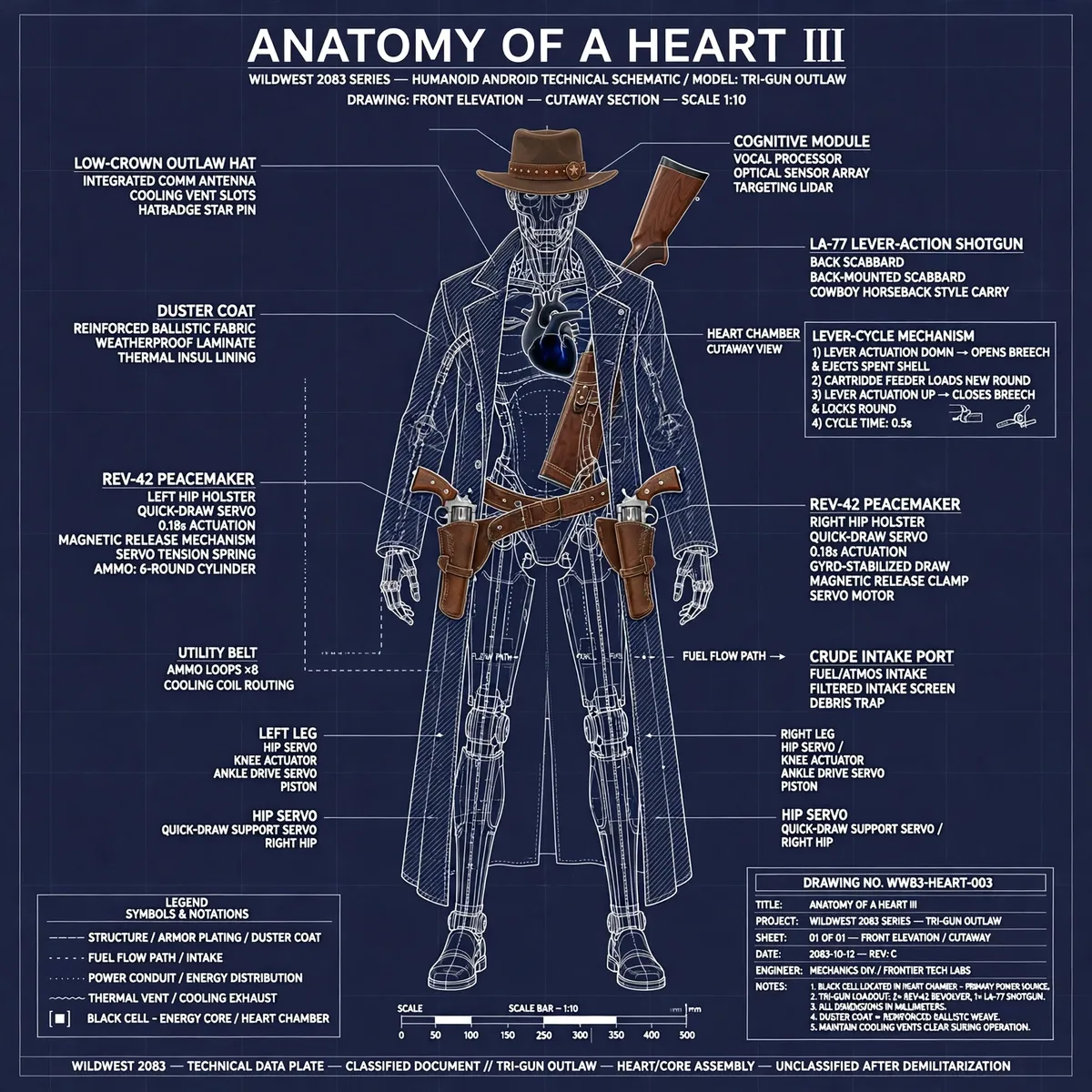
TRI-GUN OUTLAW
Two REV-42 Peacemakers on the hips, each on its own quick-draw servo — and an LA-77 lever-action shotgun riding barrel-up in a back scabbard, cowboy horseback carry. All three fed by the black cell in its heart.
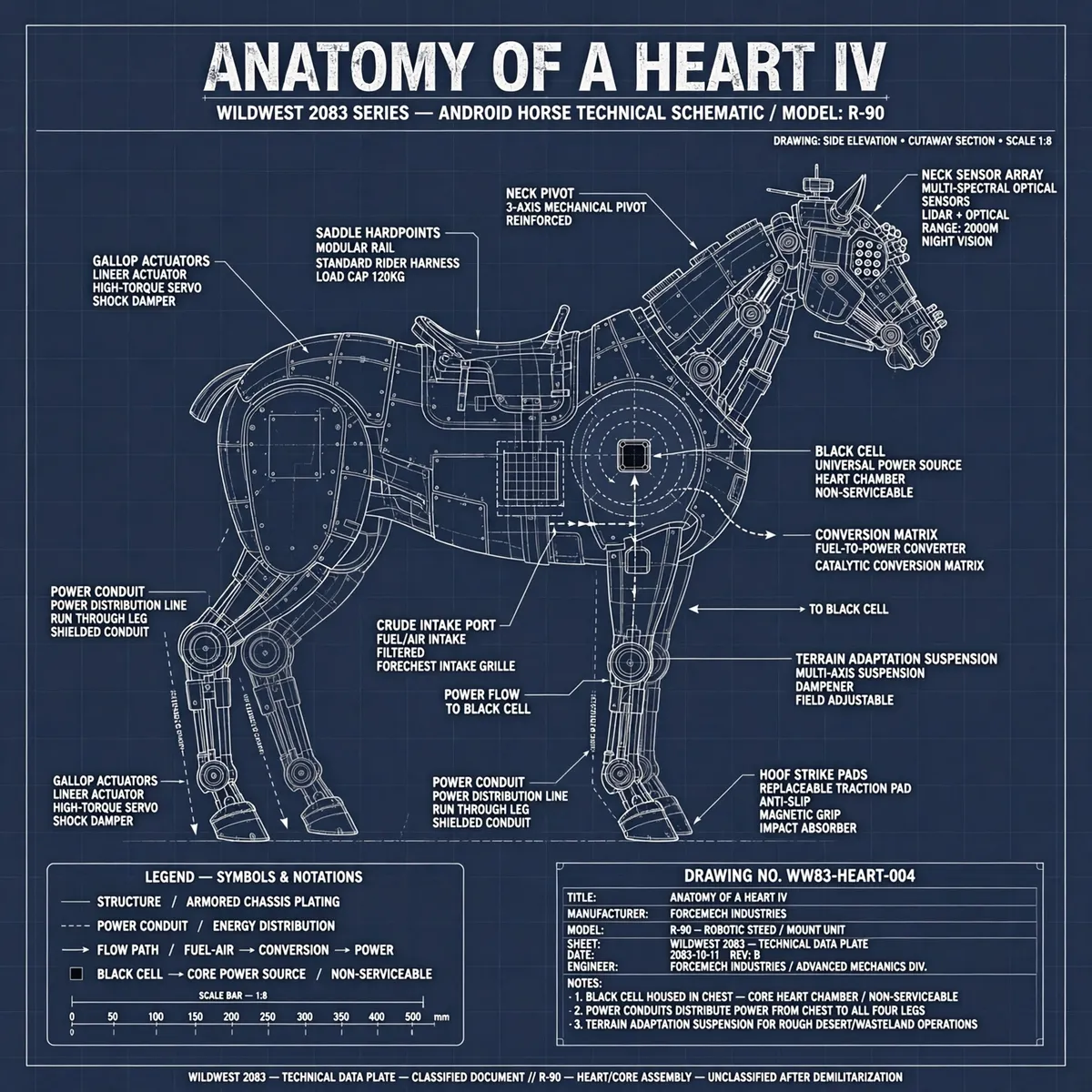
R-90
Forcemech Industries' robotic steed. Gallop actuators, magnetic-grip hooves, a 2000-meter sensor array — the horse the outlaws ride. Black cell heart, desert-rated suspension.
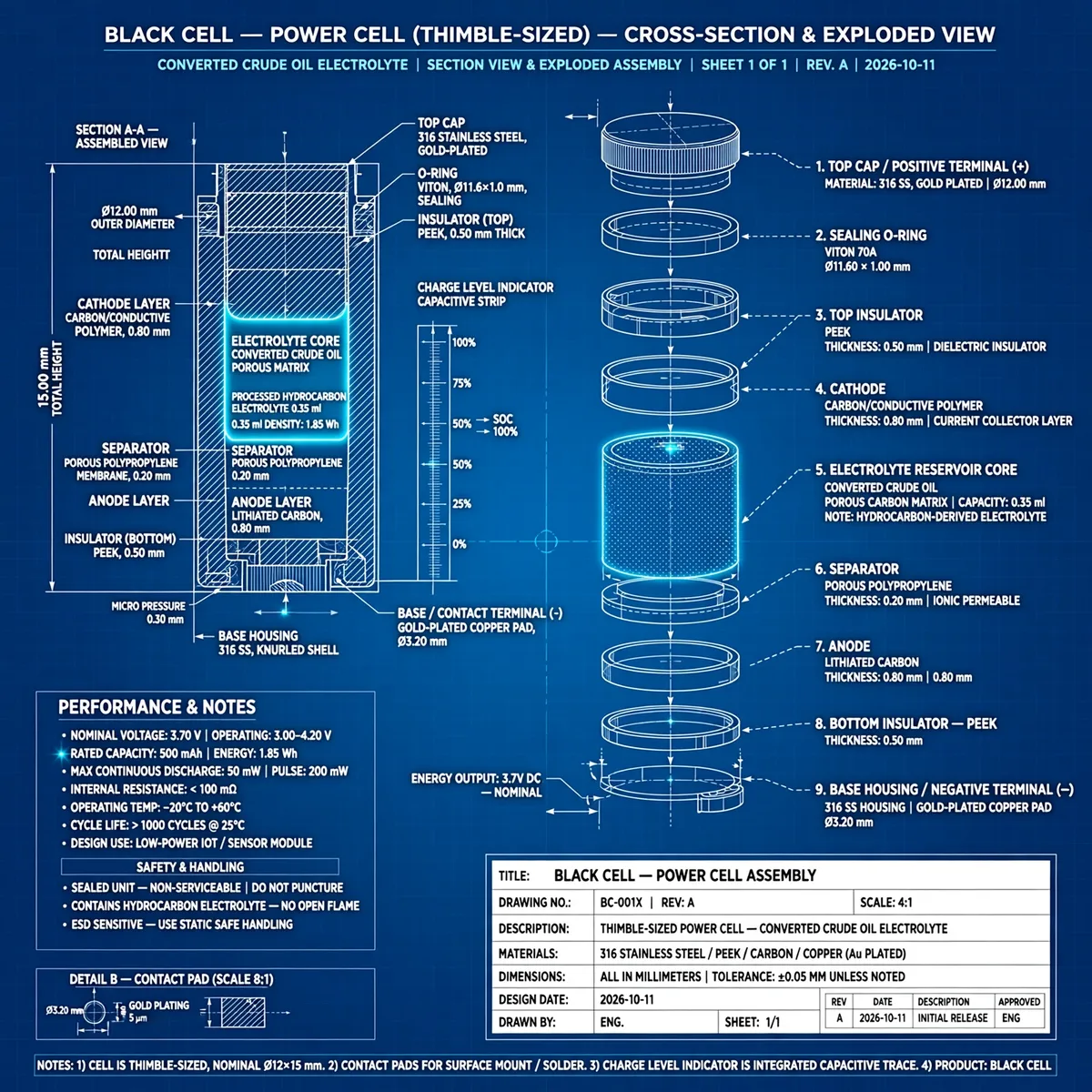
THE BLACK CELL
A thimble of Permian crude, converted — not burned — into months of machine power. Everything in Odessa orbits this object. Never touch another machine's cell.
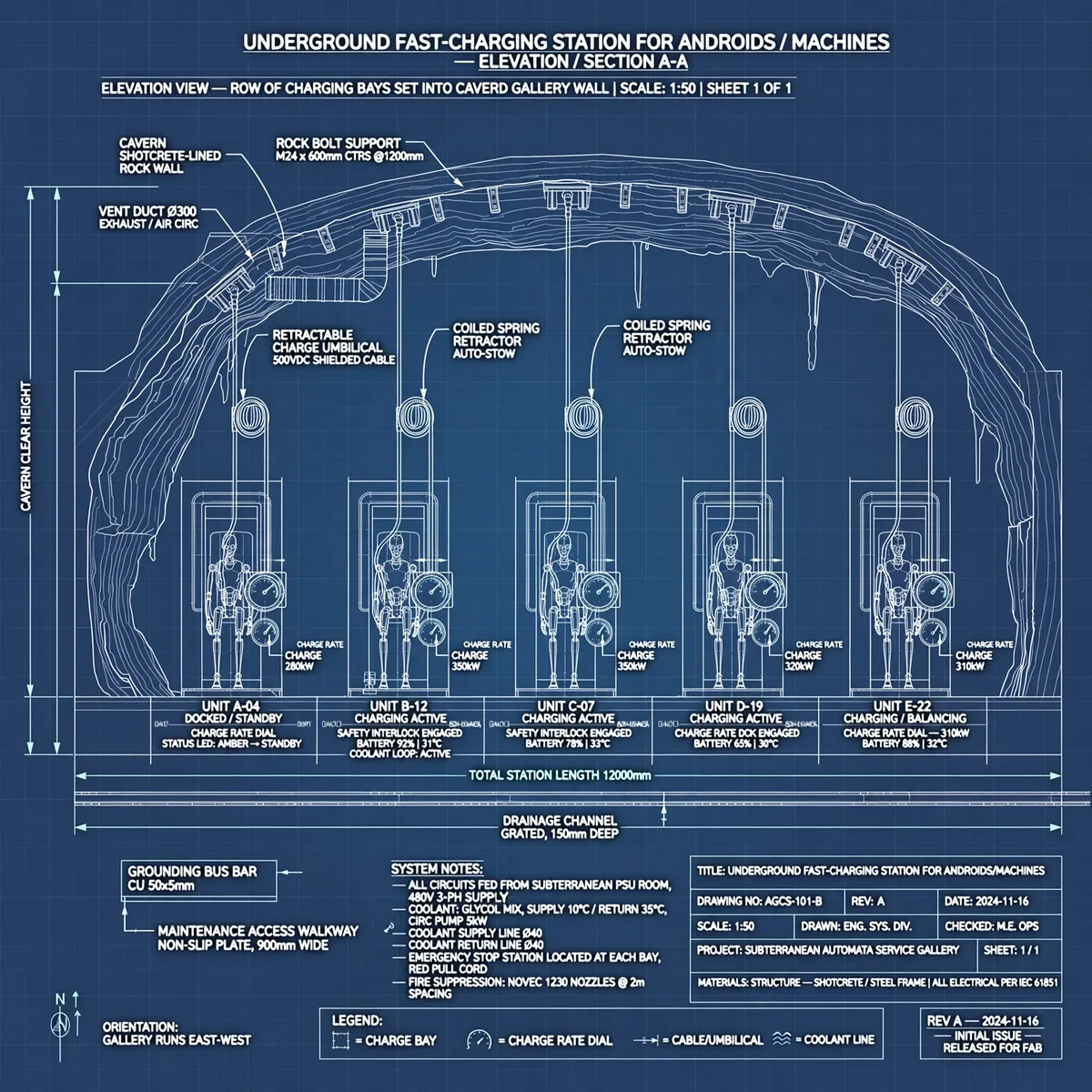
CELL STATION
Fast-charge bays set into the Shallows gallery walls. Cables like IV drips. Androids queue at 2% the way the sick once queued at shrines.
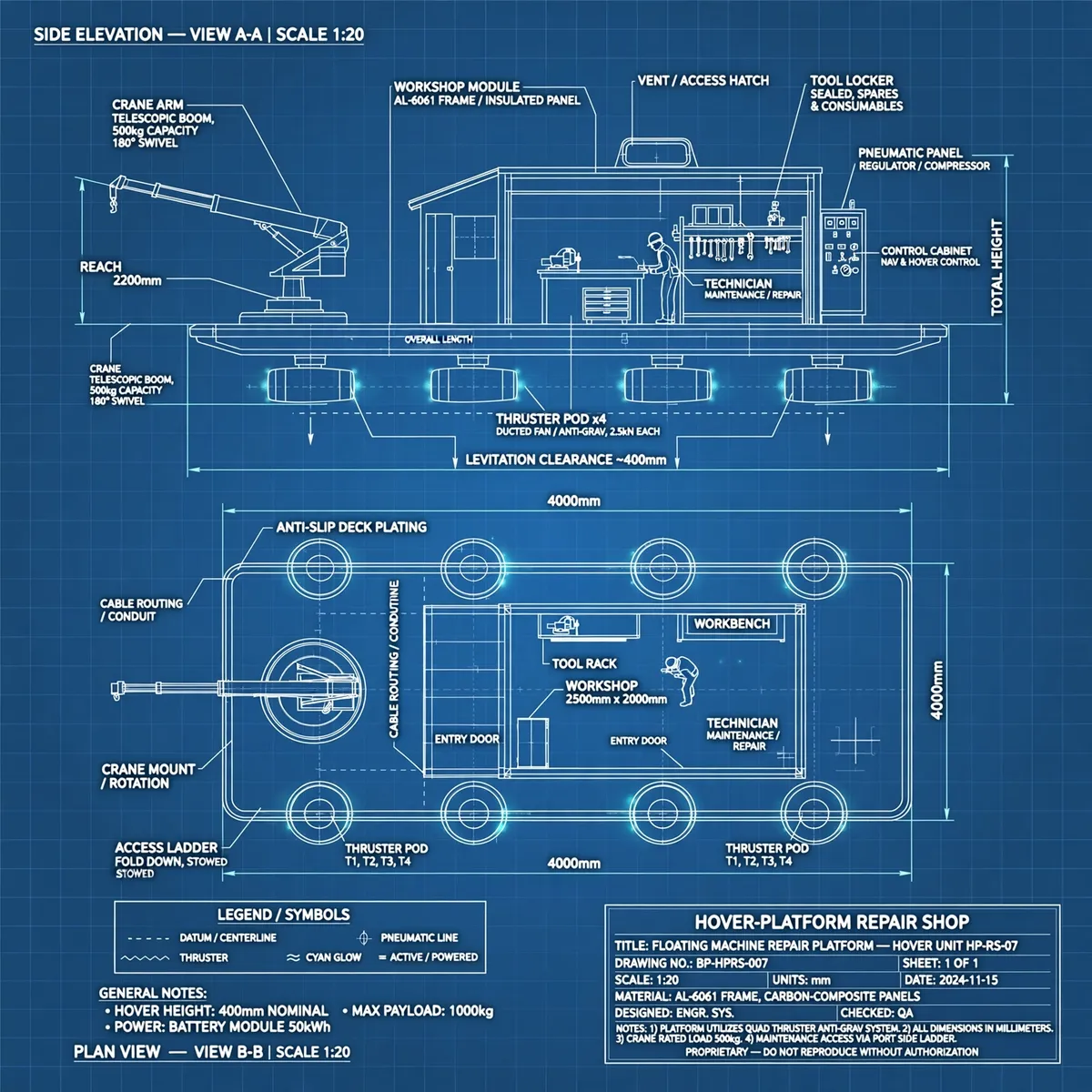
FLOAT SHOP
Hover platforms carrying machine shops, noodle stalls, cut-rate heartworks — a floating market that drifts the shaft and docks wherever the work is.
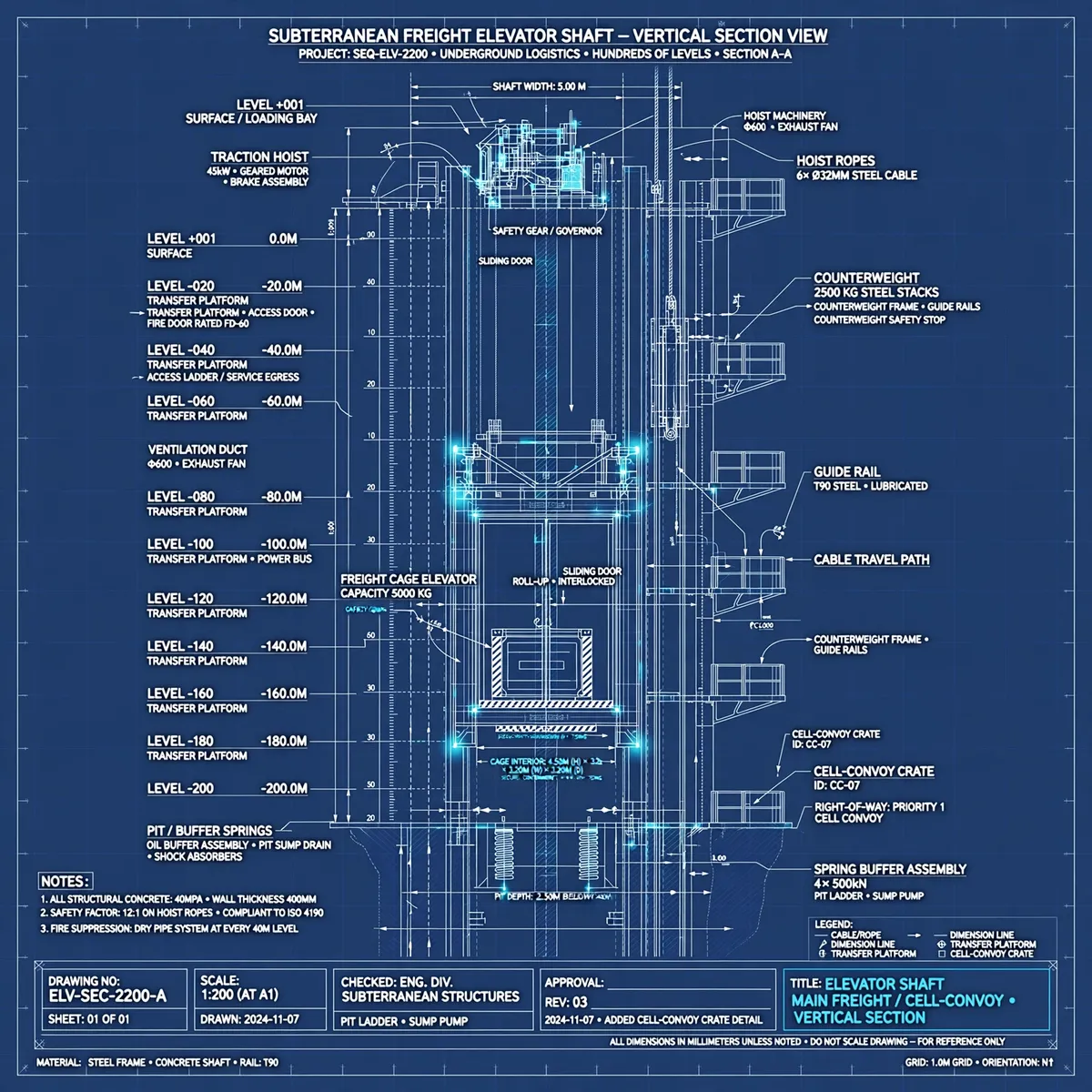
MAIN LIFT
The elevator shafts that run hundreds of levels before a transfer. Cell convoys ride with right of way — everyone else waits. A cell is a life.
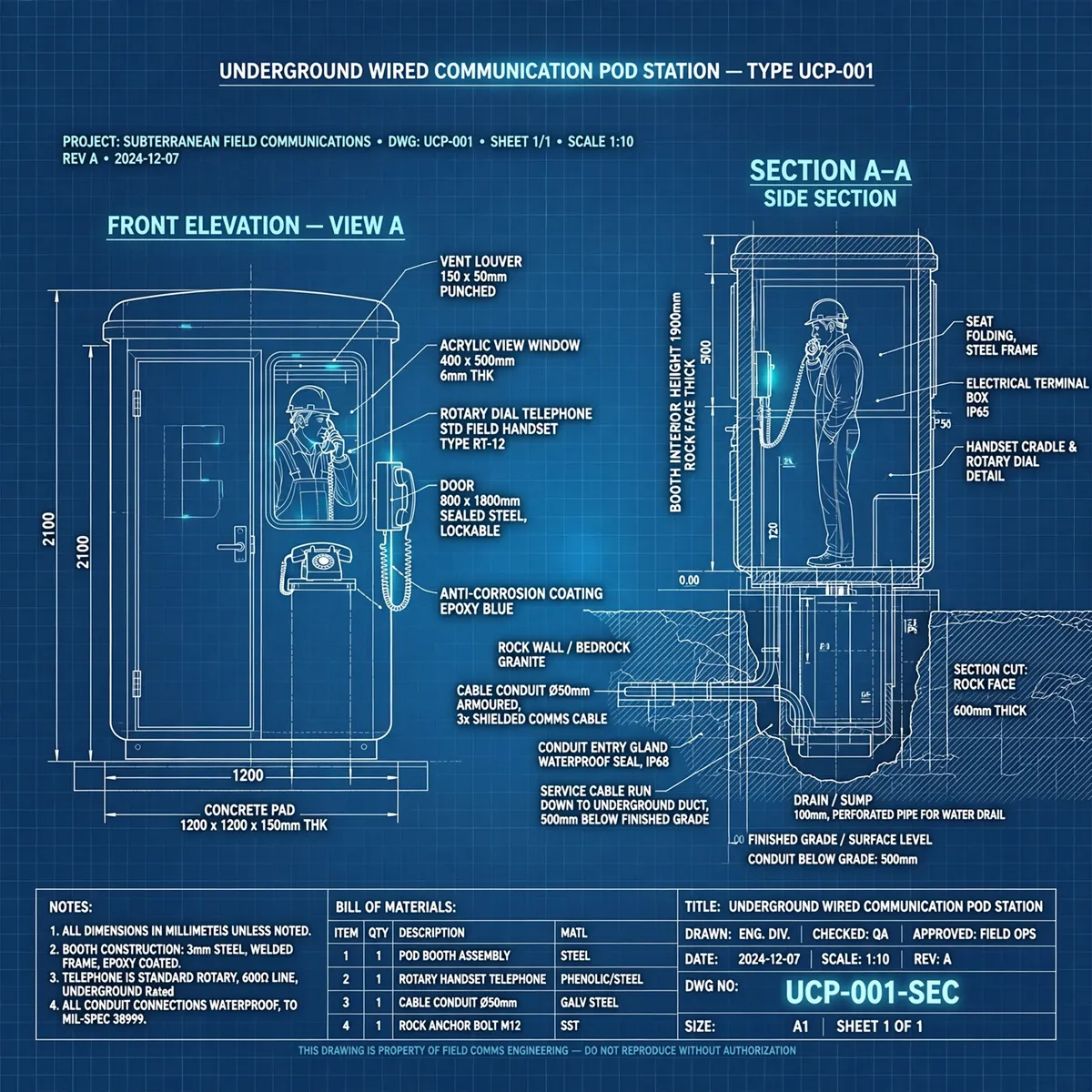
COMM POD
No cellphones — the rock eats the signal. You call from a wired pod, like the pre-cellphone era: handset, dial, a cable disappearing into the rock.
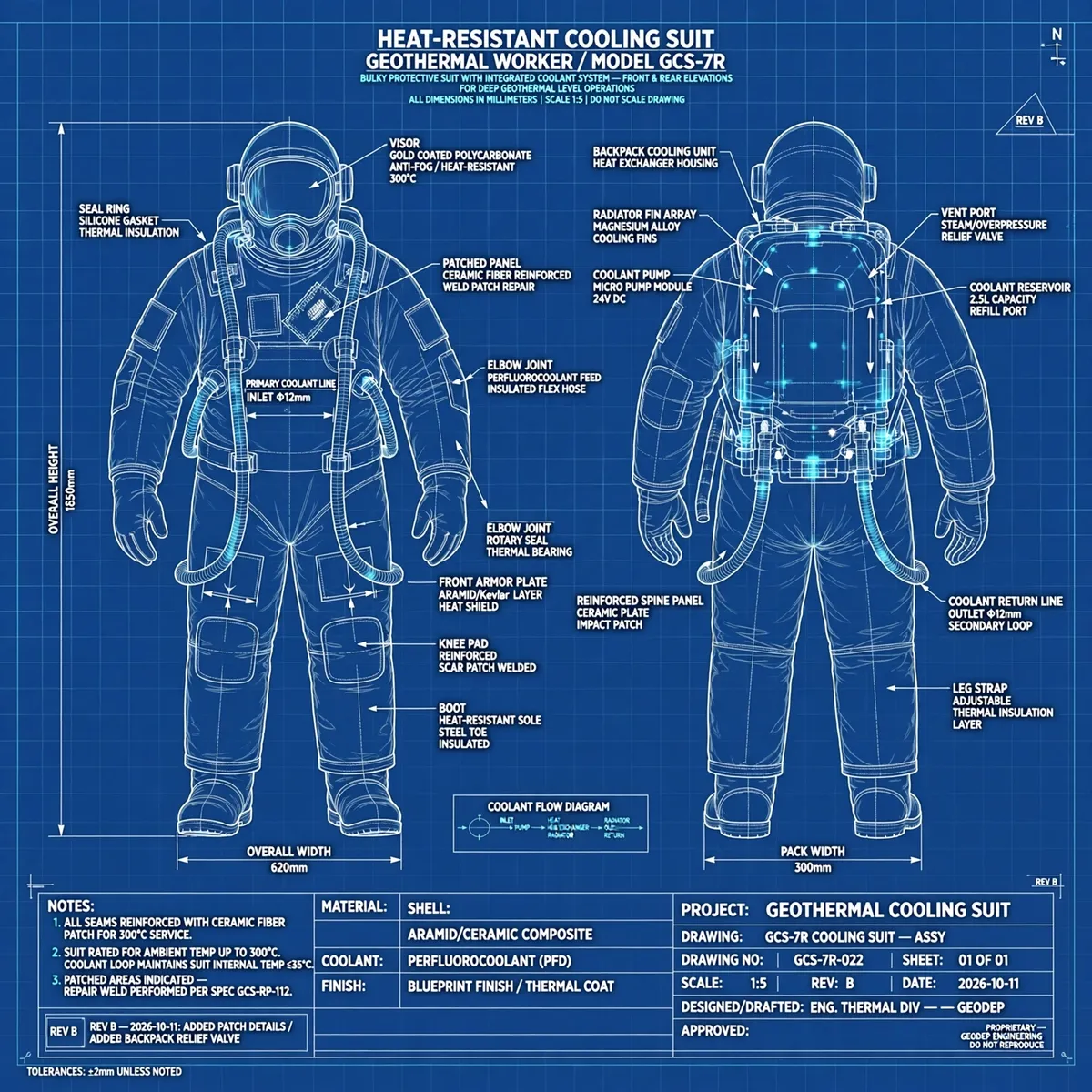
COOLING SUIT
What the Roughnecks wear on the deep face. Coolant tubes, heat-scarred panels, patched by hand. The deep levels run on cooling the way the surface runs on light.
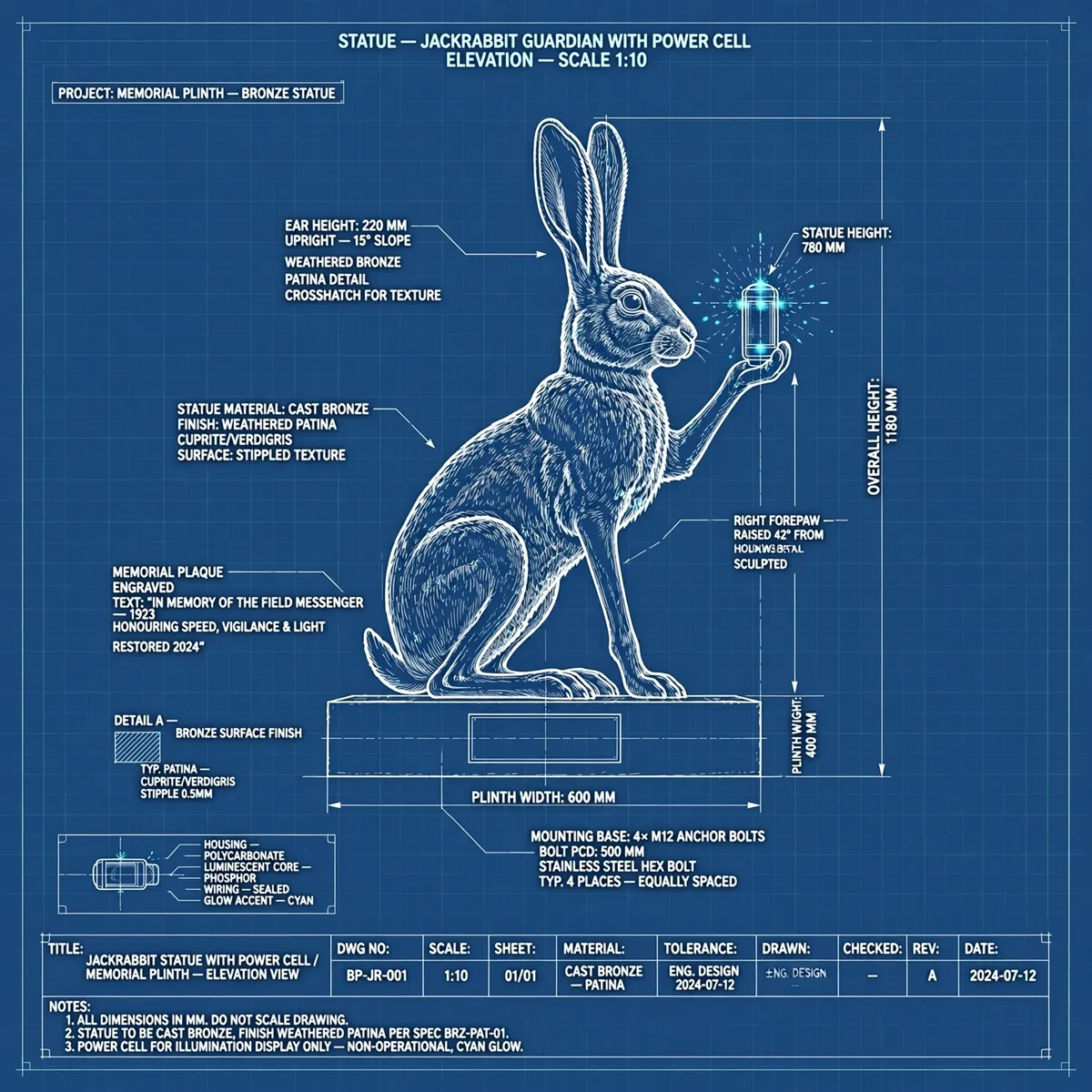
THE JACKRABBIT'S CELL
The downtown jackrabbit statue — someone put a black cell in its paw years ago. Nobody's taken it out. Pilgrims touch the steel for luck.
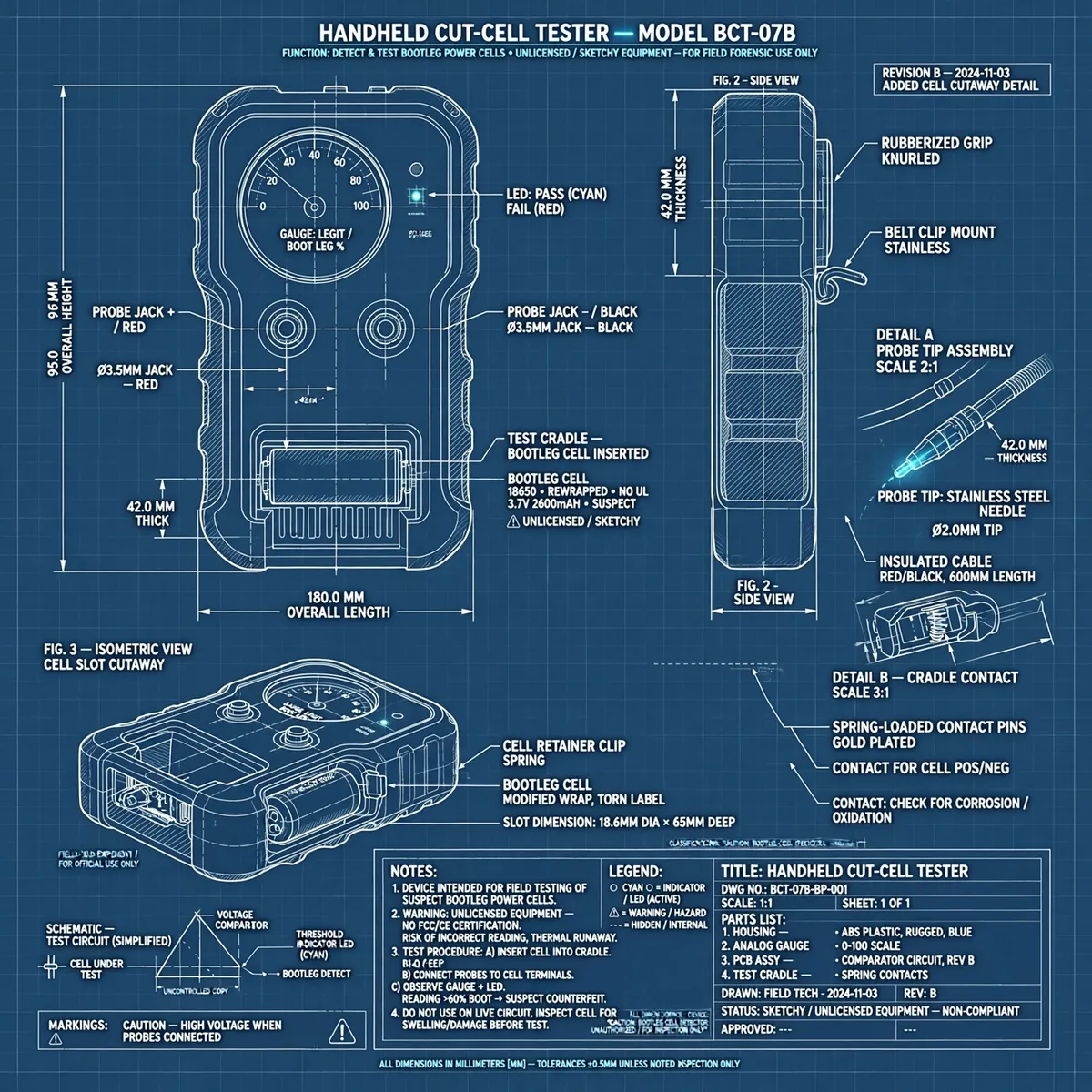
CUT-CELL TESTER
The Vaults' sketchy little meter for checking a bootleg cell won't burn you out overnight. Unlicensed, uncalibrated, and everybody owns one.
TAP ANY PLATE TO VIEW IT LARGE
Crude, ozone, hot steel, frying oil. The Spine's hum under everything, the pumpjacks' rhythm, the 6am whistle echoing down the bore. Never touch another machine's cell — it's the oldest law in the city. And announce your level like a hometown.
CHAPTER 04 WHO RUNS IT
Nobody. Everybody. The Roughnecks — the human oil families, now the deep-face drill crews. The Heartwrights pour the black cells. The Surveyors map the levels — the count of 1,062 is theirs. The Woken — androids who bought their freedom with years of labor — are full citizens. The Allocation Board decides who gets crude, and how much. And every day, the Fresh Oil arrive — human and machine — and start their descent.
The rule of this world: this is not a robot-uprising story. It is a city that found a second lifeblood — and the machines that came to drink it.